The European food packaging market is entering a new stage of transformation in 2026. As governments, consumers, and businesses place greater emphasis on environmental responsibility, packaging regulations are becoming stricter and more detailed. For food packaging importers, understanding European Packaging Regulations is no longer only a legal requirement; it is also a key factor influencing market access, brand reputation, and long-term business growth.
Importers of disposable food containers, takeaway packaging, and sustainable food packaging solutions need to prepare for changing requirements related to recyclability, recycled materials, waste reduction, and supply chain transparency. Companies that adapt early will be better positioned to compete in the European market.
This article explains the major regulatory trends, compliance requirements, and practical strategies that food packaging importers should understand in 2026.
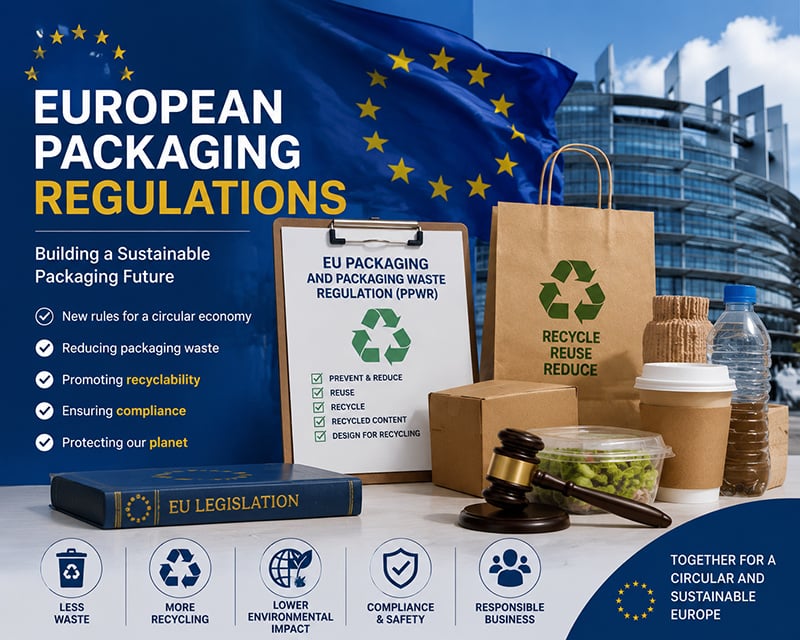
1. Why European Packaging Regulations Are Changing
Packaging waste has become one of the most important environmental challenges in Europe. The growth of food delivery services, takeaway consumption, and online food businesses has increased demand for disposable food containers. While these products provide convenience, they also create pressure on waste management systems.
European regulators are focusing on three major goals:
1. Reducing unnecessary packaging waste.
2. Increasing recycling rates and circular economy practices.
3. Encouraging manufacturers to develop more sustainable packaging solutions.
For importers, these goals mean that traditional packaging products may face additional requirements. Suppliers must demonstrate that their products meet environmental standards before entering European markets.
2. Key Requirements Affecting Food Packaging Importers in 2026
2.1 Packaging Sustainability Requirements
Sustainability is becoming a central requirement for food packaging compliance. Importers are increasingly expected to provide information about packaging materials, production processes, and environmental impact.
Businesses purchasing disposable food containers should consider:
- Whether materials can be recycled efficiently.
- Whether packaging contains recycled content where required.
- Whether product designs reduce unnecessary material usage.
- Whether suppliers can provide documentation proving compliance.
Sustainable food packaging is no longer only a marketing advantage. It is becoming a basic expectation from regulators, retailers, and consumers.
2.2 Recyclability and Circular Economy Standards
European packaging policies increasingly support a circular economy model. This means packaging should remain valuable after use through recycling or reuse systems.
For manufacturers and importers, this creates several priorities:
- Selecting packaging materials with established recycling systems.
- Avoiding unnecessary combinations of different materials.
- Improving product labeling and recycling information.
- Working with suppliers who understand European waste management requirements.
Food packaging companies that design products with end-of-life considerations will have stronger market opportunities.
2.3 Documentation and Supply Chain Transparency
Compliance is not only about the final product. Importers also need reliable supply chain information.
Important documents may include:
- Material specifications.
- Food contact safety certificates.
- Testing reports.
- Production quality records.
- Environmental compliance documents.
A professional supplier should be able to provide complete technical information quickly. Importers that fail to maintain documentation may experience delays, additional inspections, or difficulties working with European customers.
3. Impact on Disposable Food Containers
Disposable food containers remain one of the fastest-growing packaging categories due to food delivery and takeaway industries. However, regulatory changes are influencing how these products are designed and manufactured.
3.1 Material Selection Becomes More Important
Different materials have different advantages and compliance challenges. Polypropylene (PP), polyethylene terephthalate (PET), paper-based packaging, and compostable materials each have specific applications.
Importers should evaluate:
- Heat resistance.
- Food safety performance.
- Recycling possibilities.
- Transportation durability.
- Customer expectations.
Choosing the right material helps businesses balance performance, cost, and sustainability.
3.2 Demand for Sustainable Food Packaging Solutions
European buyers increasingly prefer suppliers that can offer environmentally responsible options.
Examples include:
- Recyclable plastic containers.
- Containers made with recycled materials.
- Lightweight packaging designs.
- Products optimized for reduced waste.
Manufacturers that invest in sustainable innovation can create stronger relationships with distributors, restaurants, and food service companies.
4. How Importers Can Prepare for Compliance
4.1 Work with Experienced Packaging Manufacturers
Choosing the right manufacturing partner is one of the most important steps. Experienced suppliers understand international packaging standards and can support customers with compliance documentation.
Before selecting a supplier, importers should review:
- Manufacturing capabilities.
- Quality control systems.
- Certification availability.
- Export experience.
- Ability to customize products.
A reliable supplier reduces compliance risks and improves supply chain stability.
4.2 Build a Compliance Checklist
Importers should create an internal checklist covering:
- Product material information.
- Food contact requirements.
- Packaging sustainability information.
- Testing documentation.
- Customer-specific requirements.
Regular reviews help companies identify potential problems before products reach the European market.
4.3 Monitor Regulatory Updates
European packaging rules continue to evolve. Importers should regularly monitor official updates and communicate with suppliers about upcoming changes.
Companies that wait until regulations become mandatory may face higher costs and operational pressure. Early preparation provides more flexibility.
5. Business Opportunities Created by New Regulations
Although regulations create challenges, they also create opportunities.
5.1 Growing Market for Sustainable Packaging
Demand for sustainable food packaging continues to increase. Restaurants, supermarkets, and food delivery companies are searching for packaging suppliers that can provide compliant and environmentally responsible products.
Manufacturers offering sustainable disposable food containers can differentiate themselves in a competitive market.
5.2 Competitive Advantage Through Compliance
Compliance can become a selling point. Importers that provide verified, transparent, and sustainable packaging solutions can build stronger trust with European buyers.
Instead of viewing regulations only as restrictions, companies can use them as a way to improve product quality and brand value.
6. FAQ
What are European Packaging Regulations?
European Packaging Regulations refer to rules and standards governing packaging design, materials, waste management, recycling, and environmental impact within European markets.
Why are packaging regulations important for importers?
Importers must ensure that their products meet European requirements before selling to customers. Non-compliant packaging may face market restrictions or increased costs.
What packaging products are affected?
Many categories are affected, including disposable food containers, takeaway packaging, beverage packaging, and other food-related packaging products.
How can importers ensure compliance?
Importers should cooperate with qualified manufacturers, maintain technical documentation, monitor regulatory changes, and choose materials suitable for European requirements.
Conclusion
European Packaging Regulations in 2026 represent both a challenge and an opportunity for food packaging importers. Businesses that understand sustainability requirements, improve supply chain transparency, and select reliable manufacturing partners will be better prepared for the future.
The European market is moving toward safer, more recyclable, and more sustainable packaging solutions. Companies that adapt early can not only achieve compliance but also gain a competitive advantage in the growing global food packaging industry.
Call to Action:
Looking for reliable disposable food containers and sustainable food packaging solutions for European markets? Partner with experienced manufacturers that understand international compliance requirements and can provide high-quality packaging products tailored to your business needs.
Dongguan Lvzong: 12+ years’ expertise in R&D, production & supply of full-range eco-friendly disposable supermarket household products.
No. 63, Yinhu Road, Shuishuikou Village, Qiaotou Town, Dongguan City, Guangdong Province
Copyright © Dongguan Lvzong Industrial Co., Ltd. All Rights Reserved Privacy Policy Blog
 EN
EN